

Free Scaffolding & Graphic Organizer Resources for Multilingual Learners
The following are just a few samples of the many resources we have developed for ElevatED Learning Services clients. They will give you a sense of our educational philosophy, our methods, and our commitment to providing practical tools and strategies that teachers can easily implement during their curricular planning as well as in their actual classrooms.
Scaffolding Strategies for Multilingual Learners
This resource contains 10 high-leverage scaffolding strategies for making complex content and concepts more accessible to Multilingual Learners (MLLs) at all proficiency levels. Although many of these strategies are beneficial to all students, they are essential for working with MLLs for whom the language demands and unfamiliar cultural contexts of schooling put forward additional challenges unknown to many of their native-born peers. If you’d like to learn more about these scaffolds and how they are beneficial to MLLs, contact us about our Experiencing Instruction through the Eyes of an MLL workshop in which participants directly experience the benefits of these scaffolds when they participate in a lesson taught in a foreign language.
Reducing Cognitive Overload
Since MLLs are always doing double duty by having to learn new content in a new language, we want to make sure we aren’t making tasks unnecessarily more complicated for them by asking them to contend with more than one new element at a time in any classroom task. The problem is that as fully literate adults fluent in English, we don’t always realize the burden of the cognitive load that our tasks place on students. Multiple unfamiliar or new elements within a task can add up like weights, making that task “heavier”. If too heavy, the student simply “drops the load” and does not complete the activity. Discover the high-leverage strategies for reducing cognitive overload outlined in this resource. This concept is core in a variety of ways to all of our workshops.
Language Objectives Planning Template
All lessons intended for MLL students should contain language objectives that pinpoint the kinds of academic language students will need to use as a result of having engaged in the lesson. This template provides teachers with guidance in developing language objectives once they have already identified the language demands inherent within the lesson/task. If you’d like to learn more about designing integrated content and language objectives, contact us about our 3-part Develop Effective Language Objectives workshop.
Collaborative Structures Resource Guide
Collaborative classroom activities benefit MLLs by providing them with multiple opportunities for language development as well as translanguaging, a key scaffold for accessing content. This resource contains step-by-step instructions for implementing 17 different classroom collaborative activity structures along with links to the accompanying graphic organizer samples and templates. To learn more about these collaborative lesson structures and how to integrate them in your curriculum and instruction, contact us about our Fostering Collaboration workshop series.
Amplification Activities Resource Guide
Amplification refers to activities that reinforce and review the language, skills, and content understanding students need in order to acquire grade level concepts and apply that learning, such as through extended writing about the topic. Too often teachers rush to have students apply new learning before those students have a solid grasp of the material, resulting in confusion, frustration, and misunderstanding. Amplification activities allow the teacher to formatively assess student progress in acquiring new learning and determine when they are ready to apply it. The resource linked above is a menu of effective amplification activities that can be used across many topics in all discipline areas to help students rehearse and reinforce new learning. To learn more about amplification activities and incorporating them into your own curriculum and instruction, contact us about our workshop on Amplifying Instruction for Multilingual Learners.
Criteria for Effective Graphic Organizers
This resource acts as a checklist of the key scaffolds necessary for making any graphic organizer highly effective. Such custom-designed graphic organizers grant MLLs at varying proficiency levels access to complex instruction, thus guiding them towards meeting the lesson/activity objectives. To learn more about the design of graphic organizers, read our blog on the topic and contact us about our Designing Effective Graphic Organizers workshop.
Scaffolded Text Sample: Climate Change
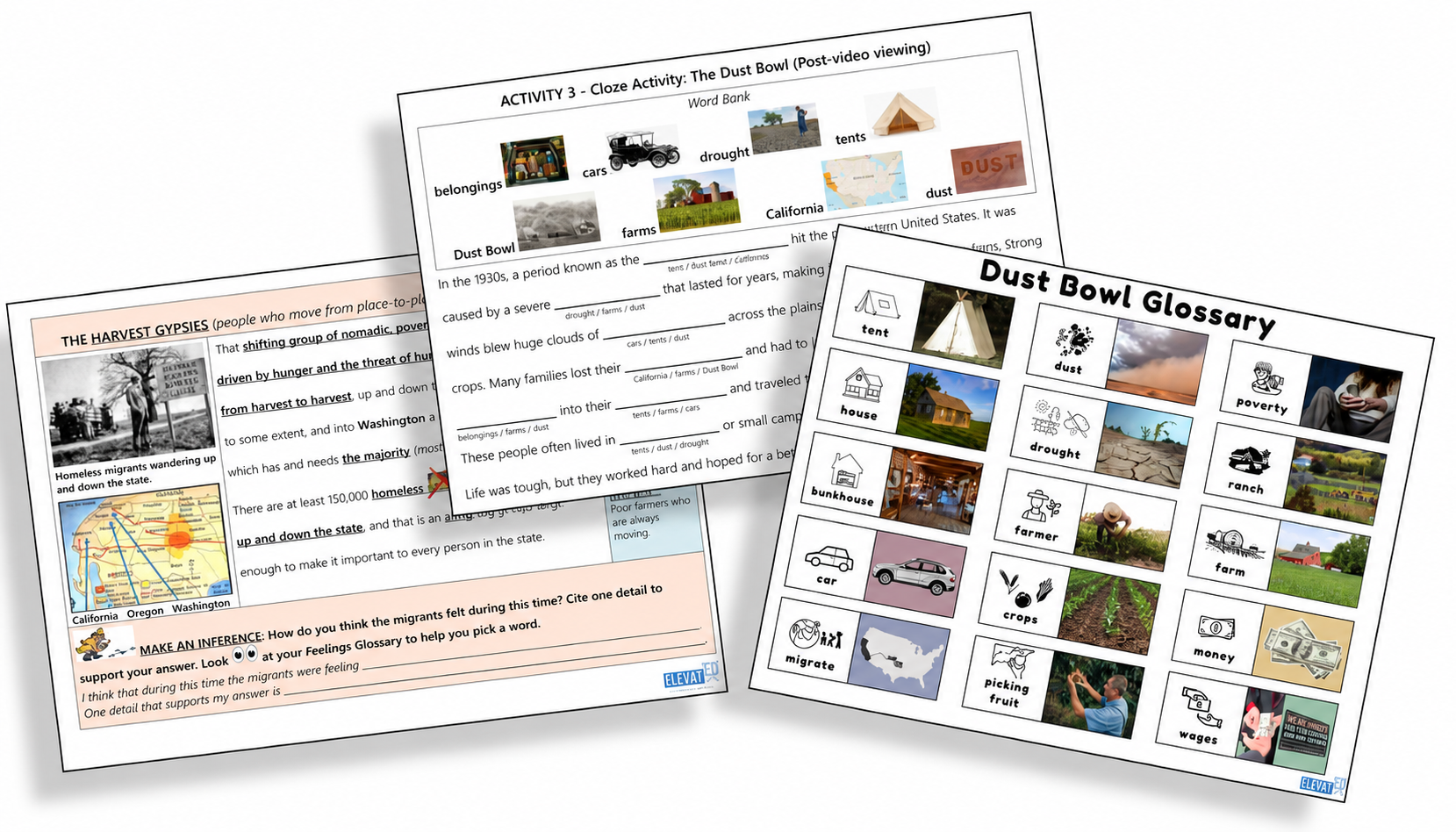
This sample demonstrates how a complex informational text about climate change can be scaffolded for MLLs without removing its essential content. It incorporates a meaningful heading, supporting visuals and captions, embedded synonyms, student-friendly marginal definitions, strategic chunking, and an end-of-text question with a sentence starter.
To learn more about these strategies and ways to implement them in your own curriculum, sign up for our Scaffolding Text for MLLs workshop here.
Translation vs. Translanguaging
Translation and translanguaging are related practices, but they serve different instructional purposes. This resource provides a side-by-side comparison that helps educators understand how translanguaging leverages students’ full linguistic repertoires to deepen content understanding, encourage participation, affirm identity, and support the development of both English and biliteracy.
Our Translanguaging: Leveraging Students’ Home Languages in the Classroom workshop explores how educators can intentionally use students’ linguistic resources to strengthen content learning, participation, and English development. Contact us to learn more or to bring this workshop to your school or district.
Scaffolding Writing Template: Artist’s Statement
This resource demonstrates how a complex writing task can be made accessible to MLLs through a clear model, an analysis of the paragraph’s structure, and a corresponding writing frame. Students are guided through the key components of an artist’s statement while still developing and communicating their own original ideas.
Differentiating Writing Tasks: ELA Example
This completed example demonstrates how an ELA character-development essay can be differentiated for MLLs without changing its central learning goal. It provides specific examples of adjusting task inputs and outputs through accessible text choices, targeted evidence, reduced quantities, writing frames, and other supports.
Differentiating Writing Tasks Template
This planning template helps educators differentiate rigorous writing tasks for MLLs by examining both what students must access and what they are expected to produce. Guiding questions support teachers in making intentional decisions about texts, topics, supporting materials, task variables, writing scaffolds, and the quantity of written output.
Our Scaffolding Writing for Multilingual Learners workshop explores how educators can use models, writing frames, and other targeted supports to make rigorous writing tasks accessible without limiting students’ original thinking. Contact us to learn more or to bring this workshop to your school or district.
Instructional Moves for Supporting Newcomers
This resource outlines eight practical instructional moves for supporting newcomer MLLs in heterogeneous classrooms. Strategies include projecting and tracking text, recording student responses, modeling tasks, chunking instruction, encouraging purposeful translation, providing wait time, strategically partnering students, and incorporating gestures and visuals.
Our two-part Supporting Newcomer MLLs in the Heterogeneous Classroom workshop explores how educators can use these and other practical strategies to help newcomers access grade-level instruction and participate meaningfully alongside their peers. Contact us to learn more or to bring this workshop to your school or district.