

A student sits with a historical document in front of them.
They start reading.
They slow down.
They reread the first sentence.
Then they stop.
Not because they aren’t trying. But because they don’t know where to begin. For many students—especially multilingual learners—primary sources don’t just feel difficult. They feel impenetrable.
What Makes Primary Sources So Challenging
Primary sources ask students to do something incredibly complex. They’re not just reading for information. They’re expected to:
Understand unfamiliar language
Interpret historical context
Analyze perspective
Evaluate reliability
And they’re often expected to do all of that… on the first read. For multilingual learners, that’s beyond difficult. It’s overwhelming.
The Problem Isn’t the Text
When students struggle with primary sources, the instinct is often to simplify the material. In reality, the issue is usually how the task itself is structured.
Primary sources require students to engage in deep thinking. That’s the goal. But when we ask students to process everything at once, we create cognitive overload—and students shut down.
A Better Approach: One Layer at a Time
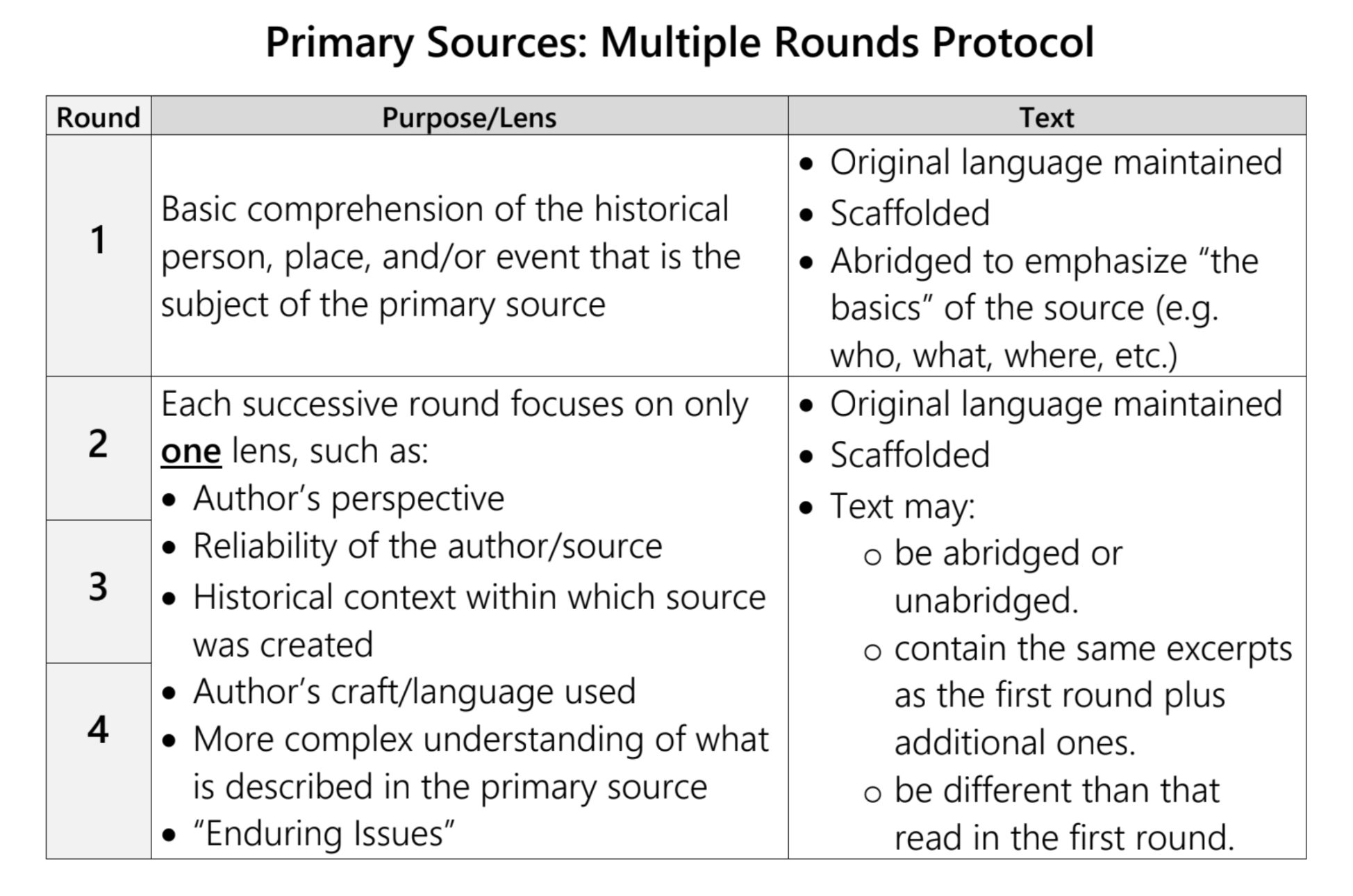
One of the most effective shifts teachers can make is simple: Don’t ask students to do everything in one read. Instead, break the experience into layers.
In the classrooms we work in, this often looks like students engaging with the same document multiple times, but with a different purpose each time.
The first read is just about understanding what the text is about
Each later read focuses on just one lens (e.g., analysis, perspective, evaluation…)
This approach reduces cognitive load while preserving rigor.
Why This Changes Everything
When students are given permission to focus on one thing at a time, something shifts.
They begin to:
Develop understanding step by step
Build confidence
Stay engaged longer
Instead of guessing or disengaging, they begin to make meaning. And that’s where real historical thinking begins.
A Small Shift You Can Try Tomorrow
Before your next primary source lesson, ask: What is the one thing I want students to focus on first? Design that first interaction around basic understanding only. You can layer in deeper analysis later.
A Resource to Get Started:
Final Thought
Primary sources shouldn’t be reserved for advanced readers. With the right structure, all students—including multilingual learners—can access and engage with them. The goal isn’t to make the text easier. It’s to make the thinking possible.
Want to Go Deeper?
In our Scaffolding Primary Sources in Social Studies for Multilingual Learners workshop, we model and practice how to thoughtfully abridge primary sources so they align with your instructional purpose and the specific lens you want students to use when reading.