She arrives in January. Tenth grade. The class is three weeks into a unit on the Progressive Era. Her English is minimal. She sits down quietly, opens the textbook to the page her neighbor points to, and looks at it.
Nobody knows quite what to do — not the teacher scrambling to find an Urdu translation of the reading, not the students who aren’t sure whether to include her in their group discussion, and not the student herself.
This is not an unusual story. Newcomer MLLs arrive throughout the school year, in every grade level, in content classrooms that were not designed with their needs in mind. The question isn’t whether to include them in grade-level academic work — research and equity both demand that we do. The question is how.
Three Principles to Build On
Same Objectives, Different Pathways
Newcomers should be working toward the same learning objectives as every other student in the class. The journey toward those objectives — and how they demonstrate achievement — will differ. But the destination is the same.
When newcomers are held to the same intellectual expectations (via different pathways), they develop the academic habits and thinking skills they’ll need as their English grows. When they’re given work that requires no real thinking, those habits don’t develop — and a gap widens that’s hard to close later.
Toeholds Throughout, Not Just Sometimes
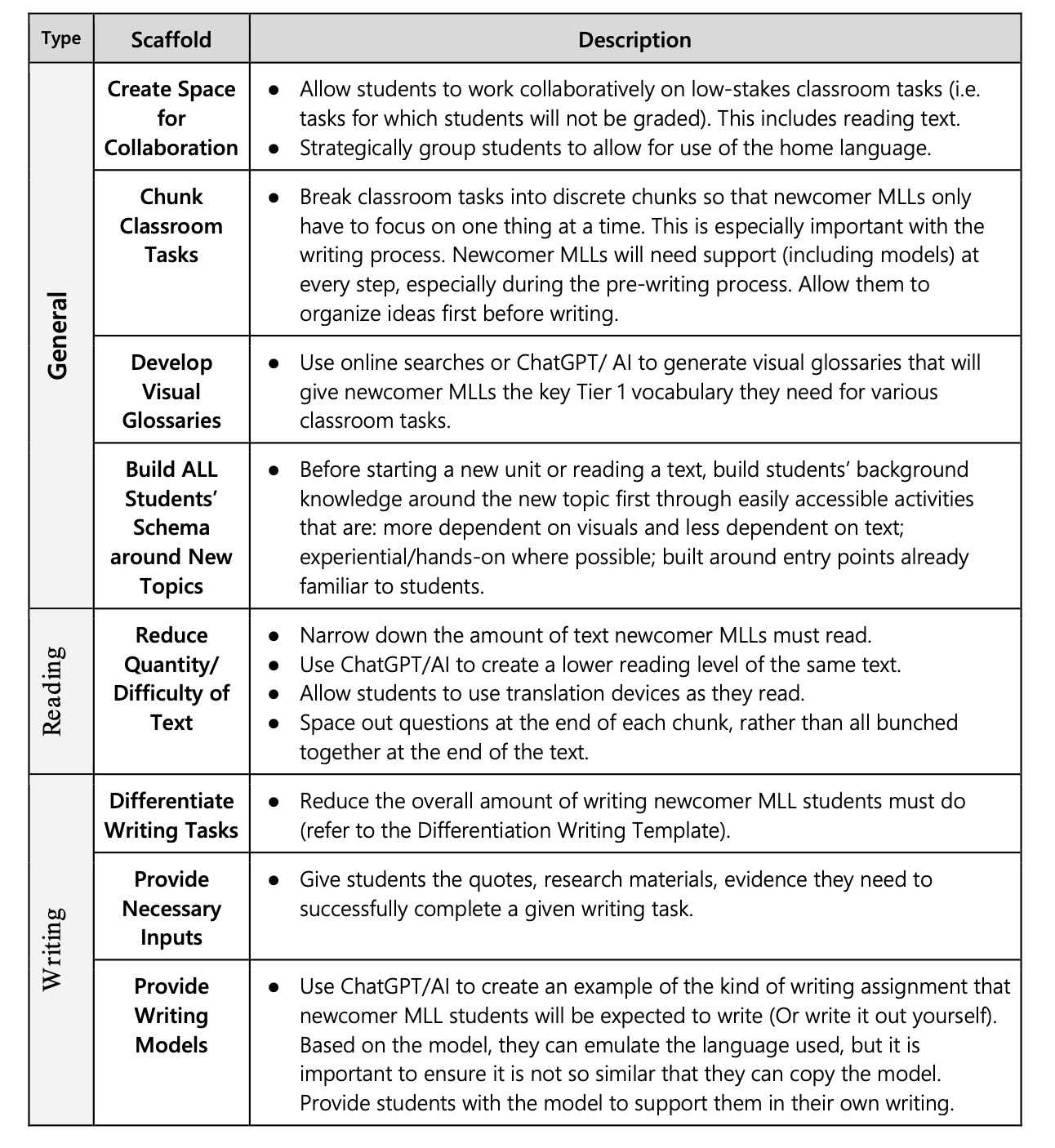
Effective newcomer support isn’t built around isolated moments of accommodation. It’s woven into the full arc of each unit — a toehold at every stage: a schema-building activity that uses visuals and requires little to no text, a collaborative task structured so a newcomer can contribute meaningfully without producing English sentences, a writing task differentiated so the newcomer engages in the same process at a significantly reduced scale.
Keep the Affective Filter Low
The stakes for a newcomer entering an American school are enormous. The affective filter — the emotional barrier that rises with anxiety and impedes learning — is almost certainly elevated. Creating a classroom environment that feels safe and low-pressure for newcomers isn’t a soft add-on. It’s a prerequisite for learning.
Four Foundational Supports
1. Collaboration — Structured, Not Assumed
Isolation in a classroom where you can’t follow the language is academically unproductive and personally damaging. Effective collaboration for newcomers requires intentional design:
Group newcomers with students who share their home language and know a little more English when possible
Design activities with visual and kinesthetic components so newcomers can participate without having to produce or wade through large amounts of text
Build in “show, don’t tell” moments: sorting, matching, labeling, pointing — legitimate demonstrations of understanding with a lighter linguistic load.
2. Pedagogy on the Page
“Pedagogy on the page” means embedding instruction directly into the materials students work with. For a newcomer catching perhaps 10% of what’s said aloud, the materials must do significant instructional heavy lifting: illustrated directions, completed models, visual glossaries, step-by-step sequences students can follow independently.
3. Chunking — Every Step, Every Time
For newcomers, the cognitive load of any academic task is significantly higher than it is for fluent English speakers. Chunking addresses this by breaking tasks into small, sequential pieces. This applies not just to readings and activities but to the writing process itself — every stage of the process needs to be as carefully designed as the final task itself..
4. Reduce Quantities — Inputs and Outputs
Inputs: Instead of the full text, identify the two or three paragraphs most central to the learning objective. Supplement with visuals and video.
Outputs: If the class writes a five-paragraph essay, a newcomer might write one paragraph with scaffolds. The intellectual task is preserved; the expected volume of production is adjusted to what the student can actually manage right now.
Low-Lift Moves for Immediate Impact
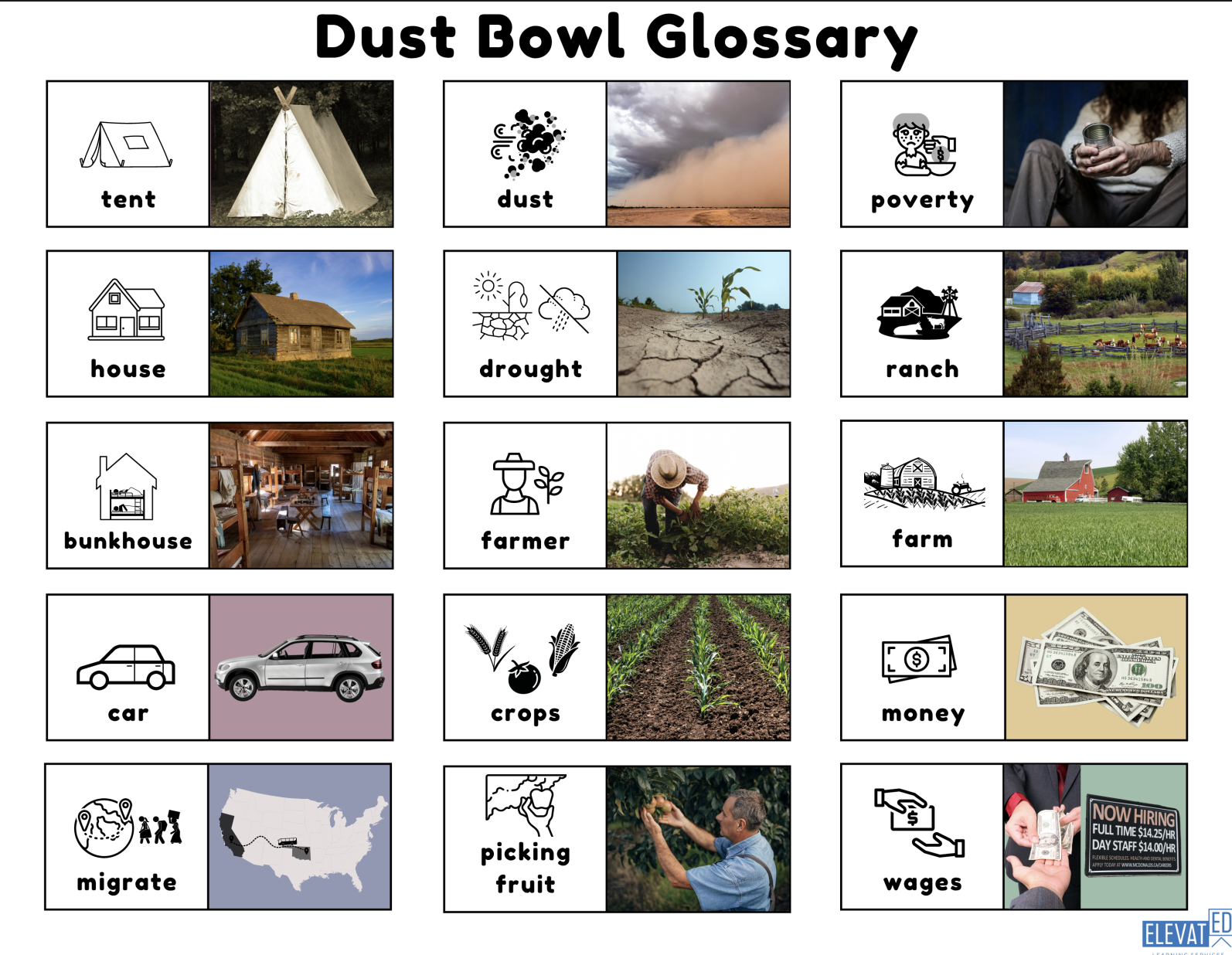
Create a visual glossary for unit vocabulary using pictures — AI tools make this quick
Adapt video viewing: captions on, speed at 0.75, shorter clips with focused viewing lenses
Encourage home language collaborative brainstorming before English production
Provide a sentence frame to support students in communicating in English an idea from their home language brainstorm
The student who arrived in January with minimal English is not waiting to become a “real” student once her English improves. She’s a student now. The question is whether the classroom she walked into was designed for her — and whether the teacher who handed her a textbook also had a toehold ready.
Teacher Resource: Lower Lift Scaffolding Strategies for Newcomers